
When Resolution Saved Competition
The First Swing
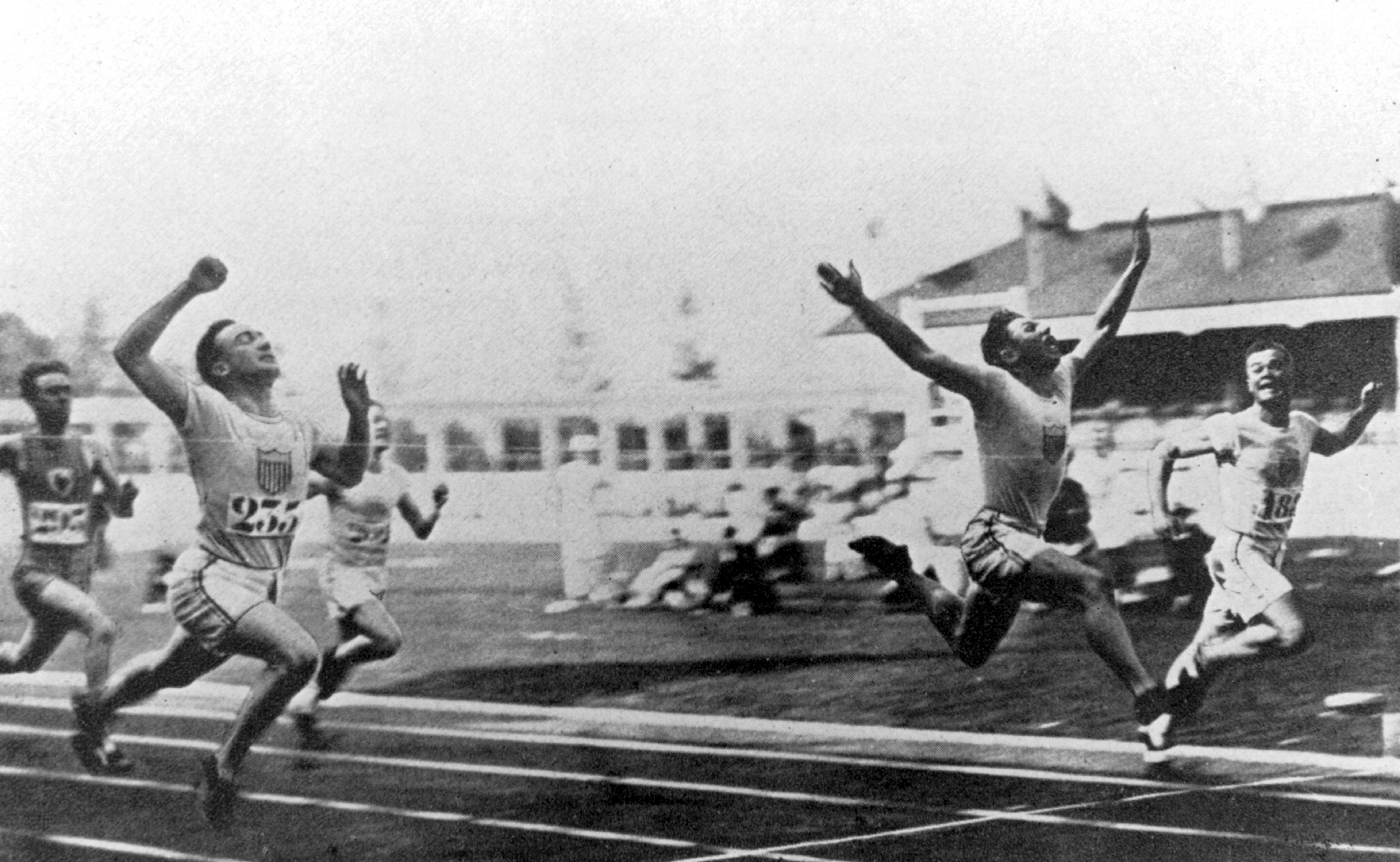
In 1922, college track star Charley Paddock ran a race that would spark a 56-year-long rivalry between the National Collegiate Athletic Association (NCAA) and the Amateur Athletic Union (AAU).
Paddock’s race was in France, and while the NCAA had given him permission to compete overseas, the AAU had not. The AAU attempted to disqualify him from future amateur meets, “including tryouts for the 1924 [U.S.] Olympic team.” With the NCAA’s backing, Paddock prevailed — but the gauntlet had been thrown down.[2]
The War
At the heart of the conflict was control. The two organizations had different sets of rules and regulations, so at events that involved collegiate and non-collegiate amateur athletes, they had to compromise. But their sports-minded leaders were more prone to competition than concession — so instead they went around and around in an unending battle of pride.[3]
Finally, in 1957, NCAA executive director Walter Byers decided enough was enough. He invited the AAU’s leadership to create a joint committee. A year later, the two groups agreed upon revisions to their “Articles of Alliance” — only for higher-ups to reject the deal.[4] The standoff continued.
By 1965, these tensions had consequences. The U.S. track team suffered its first loss to its Soviet counterpart in Kiev due in part to boycotts tied to the NCAA-AAU feud. Internal divisions were starting to impact U.S. performance on the world stage.[5]
A New Approach
Further attempts at peace were similarly unsuccessful. Recognizing the critical role sports played in American culture,[6] President Gerald Ford sought to resolve the conflict once and for all in 1975 by creating the President’s Commission on Olympic Sports. Per the commission’s findings, President Jimmy Carter passed the Amateur Sports Act in 1978, establishing the United States Olympic Committee (USOC) as the central organization for coordinating amateur sports.[7]
This time, the government tapped the American Arbitration Association® — known for tackling complex cases that blended public, individual, and organizational interests — to settle disputes between the two organizations.[8] Lo and behold, this time, it stuck. The AAA® created compromise where others — including three U.S. presidents and all of Congress — couldn’t.
Leading the Pack Toward Peace
The AAA continues to be a trusted provider of arbitration for athletic disputes including eligibility, doping and more.[9] With the recent ruling in House v. NCAA (2025) that permits collegiate athletic departments to directly compensate student athletes,[10] amateur athletics need ADR now more than ever.[11] The Amateur Sports Act of 1978 is part of the AAA’s long track record of turning even the hardest heads into team players.
[1] https://www.alamy.com/charley-paddock-the-worlds-fastest-human-100-metres-at-olympic-games-1920-antwerp-image268844965.html?imageid=4107EC1E-3A65-4F31-A060-278239B6139A&pn=1&searchId=057a6f9a6458d876bfe59a57cc1d1ad0&searchtype=0
[2] AAU v. NCAA: The Bitter Feud That Altered the Structure of American Amateur Sports - Scholarly Articles from Journals, Periodicals, Bulletins, Papers, Proceedings - LA84 Digital Library
[3] AAU v. NCAA: The Bitter Feud That Altered the Structure of American Amateur Sports - Scholarly Articles from Journals, Periodicals, Bulletins, Papers, Proceedings - LA84 Digital Library
[4] AAU v. NCAA: The Bitter Feud That Altered the Structure of American Amateur Sports - Scholarly Articles from Journals, Periodicals, Bulletins, Papers, Proceedings - LA84 Digital Library
[5] AAU v. NCAA: The Bitter Feud That Altered the Structure of American Amateur Sports - Scholarly Articles from Journals, Periodicals, Bulletins, Papers, Proceedings - LA84 Digital Library
[7] AAU v. NCAA: The Bitter Feud That Altered the Structure of American Amateur Sports - Scholarly Articles from Journals, Periodicals, Bulletins, Papers, Proceedings - LA84 Digital Library