
How New York No-Fault Insurance and the AAA® Delivered Accessible Justice
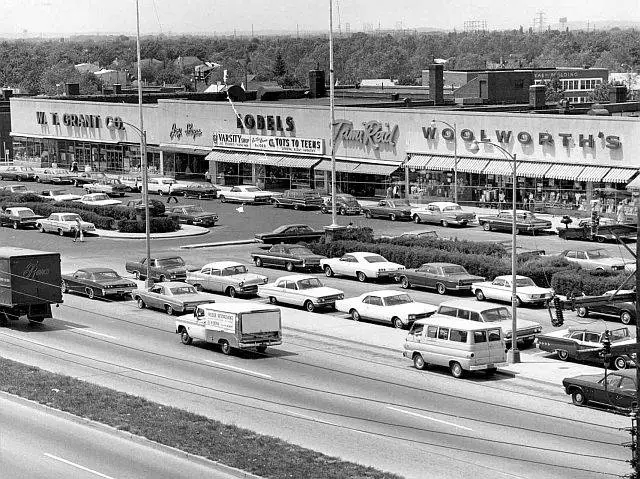
The Rise of the Car
Buick “Woodies” in driveways, Corvettes getting spit shines in garages, highways and drive-ins — by the 1970s, America was built around cars. New York, with its planned suburbs like Levittown, was no exception. By 1970, there were 6.7 million registered vehicles on its roads, the second-highest number in the country.[1] With traffic came accidents and fatalities.
The traditional tort-based insurance system couldn’t keep up. A 1970 federal study of traffic fatalities and serious accidents showed victims waited an average of 16 months for payment — longer for more serious accidents — and recovered only about 20% of their losses from insurance companies.[2]
The No-Fault Breakthrough
In 1974, New York became the largest state to adopt a no-fault insurance program.[3] It promised to pay accident victims quickly, reduce insurance costs, and keep cases out of overcrowded courts.[4] But making it work required an administrator with neutrality and know-how.
New York Chooses the AAA
The state needed an institution rooted in neutrality — and an administrator that could manage complexity at scale — to handle disputed no-fault claims. It turned to the American Arbitration Association® to manage the program.[5] By 1977, the AAA was awarded the arbitration portion of the conflict resolution piece, while the New York Department of Financial Services (DSF, then the Department of Insurance) managed conciliation.[6] As the relationship between DSF and the AAA grew and caseloads ballooned, opportunities to streamline emerged. In 1999, conciliation also moved to the AAA — consolidating both functions under one roof.[7]
To deliver, the AAA opened the New York No-Fault Conciliation Center in Downtown Manhattan, which handled 73,352 cases in its first year.[8] To handle the record-setting caseload, the AAA expanded panels, added and trained staff, and embraced new tech — including web-based systems and CD-ROMS,[9] the first electronic case folders that made the process paperless and simplified document retrieval, and more.[10]
Innovation at Scale
That early push set the stage for today. “We have tremendous technology advancements in terms of remote and automated workflows,” said AAA Senior Vice President for New York State Insurance Maureen Kurdziel. Kurdziel and her team are currently working on implementing automated document classification.[11] It’s a big project — in 2024, 86 million pages of information were classified or indexed, and as Kurdziel noted, “That’s only documents that were within 45 days of a hearing.[12]
A Sense of Mission
The contrast is stark: years in court versus months via AAA-administered arbitration or conciliation.[13] “There is a certain level of satisfaction … to help [people] navigate the system, the process, while maintaining our neutrality,” Kurdziel noted.[14]
For 50 years, New York’s partnership with the AAA has ensured fairness at scale — delivering accessible justice to millions when they’ve needed it most.
[2] https://www.nytimes.com/1970/04/29/archives/study-finds-auto-victims-regain-only-half-of-loss-study-finds-auto.html
[3] https://www.nytimes.com/1974/01/29/archives/nofault-era-opens-friday-in-state-right-to-sue-additional-coverage.html
[4] https://www.nytimes.com/1974/01/29/archives/nofault-era-opens-friday-in-state-right-to-sue-additional-coverage.html
[5] https://nysinsurance.adr.org/sites/default/files/document_repository/2025_AAA_Insurance_Reporter_Winter_0.pdf
[6]https://nysinsurance.adr.org/sites/default/files/document_repository/2025_AAA_Insurance_Reporter_Winter_0.pdf; https://www.dfs.ny.gov/About_Us; https://nysinsurance.adr.org/about-us/program-history; Maureen Krurdziel OH, Otter 24:06
[7] 2000 Annual Report_0, pg 4–5, 19, and 31
[8] 2000 Annual Report_0, pg 4–5, 19, and 31
[9] Maureen Kurdziel OH, Otter 25:11; 2000 Annual Report_0, pg 4–6
[10] 2003 Annual Report, pg 8
[11] Maureen Kurdziel OH, Otter 28:07
[12] Maureen Kurdziel OH, Otter 28:26
[13] Maureen Kurdziel OH, Otter 30:38
[14] Maureen Kurdziel OH, Otter 33:21