
How the AAA Prepares for the Unexpected
Finding a Calling
As a boy, NOAA Senior Hurricane Specialist Lixion Avila dreamed of experiencing a hurricane at close range. On Aug. 23, 1992, he got his wish — in the form of Hurricane Andrew. What he saw changed his dream forever: He now hopes never to live through such devastation again.
“I don’t think anyone can ever be fully prepared to experience a Category 5 hurricane,” Avila reflected. “I know I wasn’t.”[1]
A key part of disaster preparedness is anticipating the need for relief. That’s where the American Arbitration Association comes in. In the wake of Hurricane Andrew, the AAA administered a mediation program to help homeowners resolve insurance claims. With a reported 92% settlement rate across more than 2,500 submissions, the AAA became a vital part of the recovery process,[2] allowing victims to focus on rebuilding their homes, communities, and livelihoods.
Beating Unprecedented Odds
In 2005, Hurricane Katrina ripped through Louisiana and Mississippi, followed weeks later by Hurricane Rita.[3] Building upon its experience with Hurricane Andrew, the AAA quickly launched the Disaster Recovery Claims Resolution Services program[4] — an effort that required finding hearing spaces in wrecked communities, remote training, and delivering results fast.[5]
It “was an all-hands-on-deck” moment, recalled AAA Executive Vice President Francesco (Frank) Rossi.[6] Employees flew in for short stints, stayed in whatever hotels were available, and made supermarket runs to buy tables and chairs for makeshift meeting rooms.[7] Even in such adverse conditions, the AAA resolved 17,831 cases with a 76% settlement rate.[8]
Getting Personal
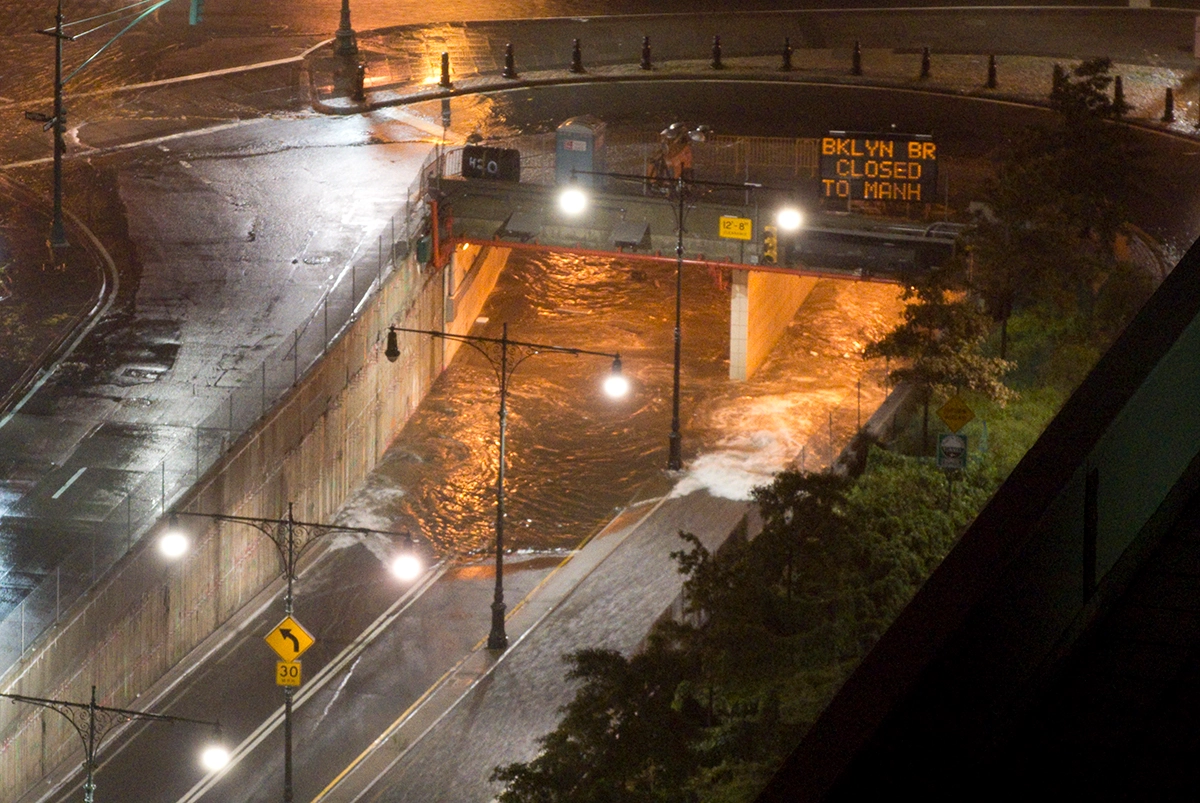
Disaster struck closer to home in 2012. When Hurricane Sandy hit the Eastern Seaboard, the AAA’s employees were both victims and responders.[9] The AAA stood up a low-cost mediation program for New York and New Jersey, using churches and community centers as hearing rooms,[10] and resolved 4,351 claims.[11]
The Key to Every Disaster
With each of the AAA’s disaster relief programs came an opportunity for growth.
"What we learned from Katrina … was rapid response,” said Rossi. “Sandy woke us up to the fact that we couldn’t necessarily rely on our corporate headquarters, on our offices.”
Rossi credited those experiences with preparing the AAA for later crises like the COVID-19 pandemic. “We put in place our first business continuity plan following Sandy,” he said. “When COVID hit, literally within about a day and a half, we were back in business.”[12]
Today, the AAA applies its disaster relief expertise nationwide, aided by the AAA-ICDR Foundation. On top of using mediation to bring the claims process up to the speed required when disaster strikes, it also provides immediate emergency support when people need it most. During the 2025 Los Angeles wildfires, the AAA matched staff donations and provided essentials like blankets and chargers.[13] Helping real people get through life’s toughest challenges: That’s the power of ADR.
“I think with our disaster relief programs, we’ve given people a chance to move forward,” said AAA Senior Vice President Christine Newhall. “Let’s not forget about the people. And at any time, it could be you — it could be me.”[14]
[3] https://www.adr.org/media/bildrkix/mass-claims-and-federal-programs-adr.pdf (PDF page 2) and Hurricanes Katrina and Rita | response.restoration.noaa.gov
[4] AAA Responds to Hurricane Tragedy with Program to Manage Disputes and https://www.adr.org/media/ogxn310q/a-guide-to-aaa-disaster-recovery-claims-mediation.pdf and https://www.adr.org/media/hevc00wh/disasterrecoveryclaims_brochure.pdf and 2005 Annual Report_0.pdf(PDF page 4)
[6] Francesco (Frank) Rossi Oral History, AAA/HF, 2025
[7] Francesco (Frank) Rossi Oral History, AAA/HF, 2025; Christine Newhall Oral History, AAA/HF, 2025
[9] Francesco (Frank) Rossi Oral History, AAA/HF, 2025; Hurricane Sandy
[10] Francesco (Frank) Rossi Oral History, AAA/HF, 2025
[12] Francesco (Frank) Rossi Oral History, AAA/HF, 2025
[14] Christine Newhall Oral History, AAA/HF, 2025