
How the AAA® and Its Voluntary Labor Arbitration System Aided National Recovery
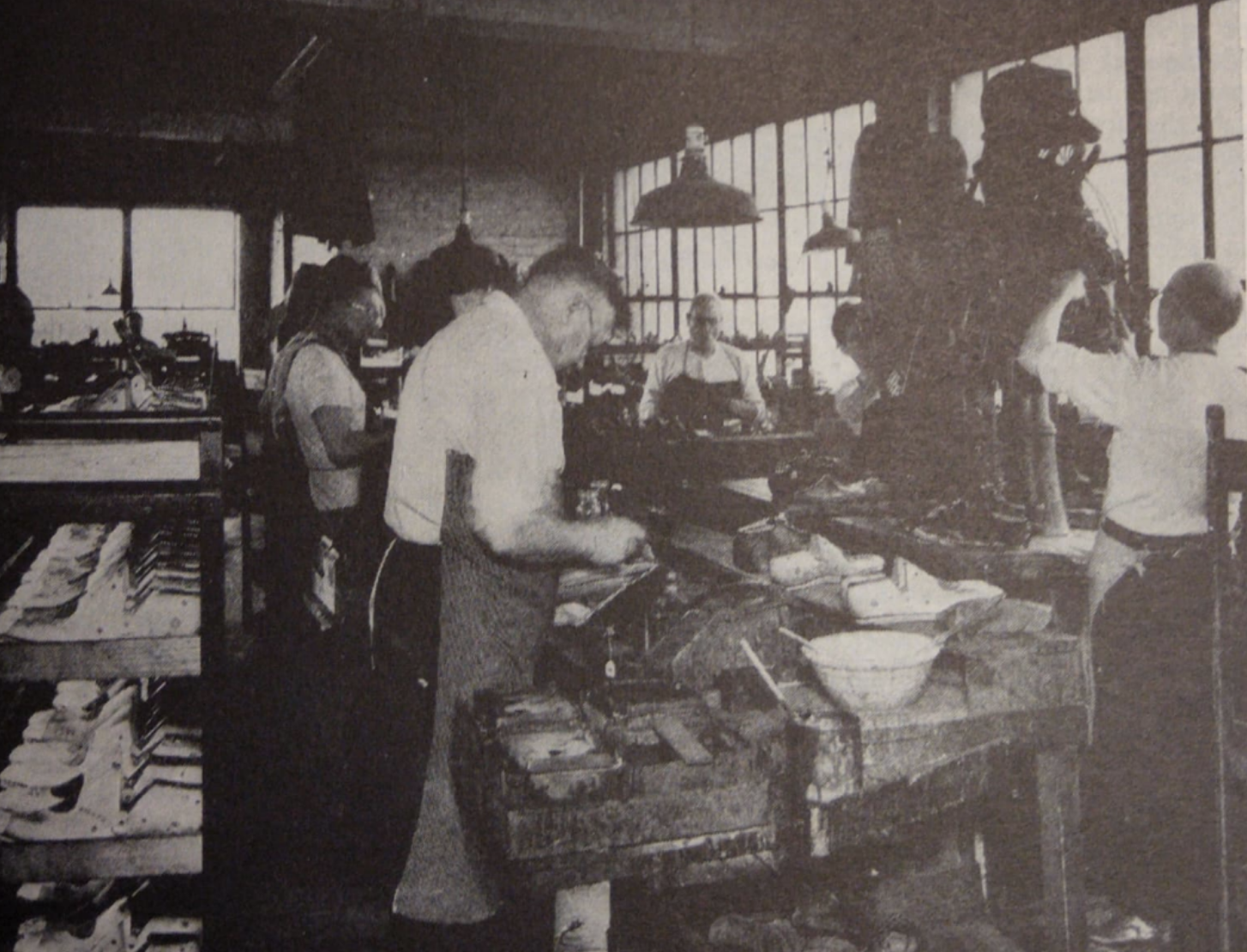
[Caption] ERA workers in a factory operating by the Governor’s Commission on Unemployment Relief (1934-1935).[1] The AAA’s success in de-escalating tensions in the Great Depression era was in part thanks to its understanding of the human issues at the root of labor disputes.
The banquet hall at New York’s Hotel Astor buzzed with excitement as Edward F. McGrady, vice president of the Radio Corporation of America, took the stage. At the American Arbitration Association® event that September evening in 1938, labor, business, and political leaders sat side by side — their shared tables a powerful symbol of the AAA’s efforts to improve industrial relationships.[2]
About a year into its existence, the AAA’s Voluntary Industrial Arbitration Tribunal had already handled 100 cases involving giants like Standard Oil, CBS, NBC, the United Auto Workers, and Actors’ Equity — each settled to the satisfaction of all parties.[3][4] This was during the Great Depression, a time of deep labor unrest and escalating tensions. Southern textile workers, West Coast longshoremen, and laborers in other industries were striking for fairer conditions and living wages.[5]
New Deal reforms like the National Industrial Recovery Act (1933) and the National Labor Relations Act (1935) empowered unions and collective bargaining but also highlighted the urgent need for fair, structured dispute resolution.[6] The AAA answered that call by pioneering a system to keep labor and management talking instead of striking.
Applying Lessons — and Learning New Ones
To blaze a path to industrial peace, the AAA adapted lessons from commercial arbitration while recognizing that labor disputes were fundamentally different. Big questions demanded careful answers: Should Labor Tribunal panel members follow different standards? Who was best qualified to resolve labor conflicts? Was the goal justice or compromise?[7]
Unlike commercial disputes — often about price, quality, or delivery — these labor disputes were deeply human, centered on relationships, trust, and the livelihoods of entire communities. The AAA understood these nuances and approached the creation of the Voluntary Labor Arbitration System with great care.[8]
Instead of jumping directly to arbitration, the AAA encouraged conciliation and mediation first, reserving arbitration as a last resort. To avoid role conflicts, the new tribunal excluded bargaining processes and created a separate labor panel with specialized qualifications. A true national labor arbitration system was taking shape.[9]
Creating “Partners in Joint Enterprise”
Democratic processes and policies to protect the rights of all parties were key. The AAA’s voluntary model focused on preserving relationships, preventing escalation, and supporting steady, stable production — all essential to national recovery and growth during the New Deal era.[10]
McGrady’s speech that night in 1938 celebrated this progress. “Think of it! … One hundred cases submitted; 100 cases settled to the satisfaction of all parties concerned,” he marveled, urging labor and management to see each other as “partners in a joint enterprise whose success depends upon mutual good will.”[11]
The establishment of the Voluntary Labor Arbitration Tribunal marked just one of the ways that, for 100 years, the AAA has built the tools to strengthen this joint enterprise and keep industrial peace.
[2] “Use of Force Futile Against Justice—Industry and Workers Partners in Joint Enterprise: Business Must Be Given Chance to Live and Grow” Edward F. McGrady, sept. 29, 1938 The Buffalo News
[3] 1991_Pioneers in Dispute Resolution_65th anni book.pdf, pages 6–9
[4] “Use of Force Futile Against Justice—Industry and Workers Partners in Joint Enterprise: Business Must Be Given Chance to Live and Grow” Edward F. McGrady, sept. 29, 1938 The Buffalo News
[6] A History of Alternative Dispute Resolution, pages 117-119.
[7] American Arbitration: Its History, Functions and Achievements, pages 83-86
[8] American Arbitration: Its History, Functions and Achievements, pages 83-84
[9] American Arbitration: Its History, Functions and Achievements, pages 84-86
[10] American Arbitration: Its History, Functions and Achievements, pages 91; “Use of Force Futile Against Justice—Industry and Workers Partners in Joint Enterprise: Business Must Be Given Chance to Live and Grow” Edward F. McGrady, sept. 29, 1938 The Buffalo News
[11] “Use of Force Futile Against Justice—Industry and Workers Partners in Joint Enterprise: Business Must Be Given Chance to Live and Grow” Edward F. McGrady, sept. 29, 1938 The Buffalo News