
Brokering Warmer Economic Relations During the Cold War
While Cold War superpowers were building walls and stockpiling weapons in the 1960s–1980s,[1] the American Arbitration Association® was quietly building something else: trust.
As tensions between East and West escalated — reaching a boiling point during the Cuban Missile Crisis in 1962 — nuclear war loomed dangerously close. But a period of détente followed, ushering in an era of diplomacy and creating new space for cooperation and a more peaceful world. Among those offering a steady hand was the AAA®.[2]
New Horizons
The AAA was eager to expand its “techniques developed to keep the peace in labor-management relations” to new frontiers, including “commercial claims arising [from] trade with the Soviet Union and China.”[3] In 1970, the United States formally accessioned the Convention on the Recognition and Enforcement of Foreign Arbitration Awards (also known as the New York Convention), twelve years after the UN adopted it.[4] For the first time, American companies doing business with state-owned enterprises in places like the Soviet Union now had a reliable, neutral process for resolving commercial disputes.[5]
Though their nations’ ideologies and legal systems were worlds apart, Soviet and American businesses could now voluntarily choose arbitration to settle their differences. Enforceable arbitration agreements and awards across borders helped lower the stakes, encourage investment, and build economic bridges between adversaries. And much of the thinking behind and language of these early international commercial arbitration precepts and protocols came from an AAA visionary: Chairman Judge Howard M. Holtzmann.[6]
A Chairman and an International Arbitration Architect
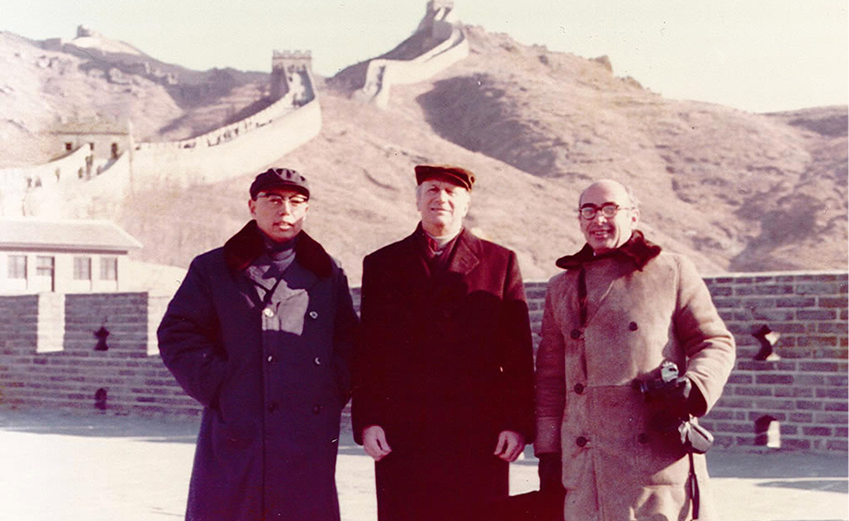
In 1974, just a few years after “ping-pong diplomacy” began thawing U.S.-China relations, Holtzmann led the AAA’s “first mission to the People’s Republic of China.” It was a landmark moment in U.S.-China trade relations. It was also another example of the AAA showing up where diplomacy met commerce — and helping resolve the friction between them.[7]
But Holtzmann’s work wasn’t finished. In 1977, he helped draft the USA-USSR Optional Clause Agreement, which allowed commercial disputes between U.S. corporations and the Soviet trade organization to be submitted to binding arbitration in Sweden.[8] He went on to help draft model laws for the United Nations Commission on International Trade Law (UNCITRAL) that the UN adopted. He also served on the Iran-United States Claims Tribunal as part of the settlement of the Iranian hostage crisis in the 1980s.[9] Meanwhile, the AAA continued to administer international cases under its own commercial rules and provided similar services under the new UNCITRAL rules, harmonizing best practices and strengthening global ties.[10]
Quiet Power
By the mid-1980s, the AAA had earned global recognition as a trusted leader in cross-border dispute resolution — proving that even during the Cold War, diplomacy didn’t always wear a flag. Sometimes, it carried a case file.
[3] “Arbitration: Growing Role, Possibly a Waning One Too, Nov 2, 1977, NY Times https://timesmachine.nytimes.com/timesmachine/1977/11/02/75698241.html?pageNumber=83; https://www.asil.org/resources/howard-m-holtzmann-archive
[4] 1970 9.30_UN.pdf “Excerpts from the Remarks of Donald B Straus” United Nations September 30, 1970.
[6] https://www.asil.org/resources/howard-m-holtzmann-archive; https://www.newspapers.com/image/464047807/?match=1&terms=Howard%20Holtzmann%20Arbitration
[8] “Arbitration: Growing Role, Possibly a Waning One Too,” Nov 2, 1977, NY Times https://timesmachine.nytimes.com/timesmachine/1977/11/02/75698241.html?pageNumber=83; https://www.asil.org/resources/howard-m-holtzmann-archive
[9] and Pioneers in Dispute Resolution A History of the American Arbitration Association On Its 65th Anniversary (1926-1991), pages 13; Digital Exhibit: Iran-US Claimes Tribunal” https://www.asil.org/resources/howard-m-holtzmann-archive; “Howard Holtzmann Obituary, https://www.legacy.com/us/obituaries/nytimes/name/howard-holtzmann-obituary?id=23758298
[10] 1980s_Modern Dispute Settlement Pamphlet.pdf, page 5