
Women in Law at the AAA®
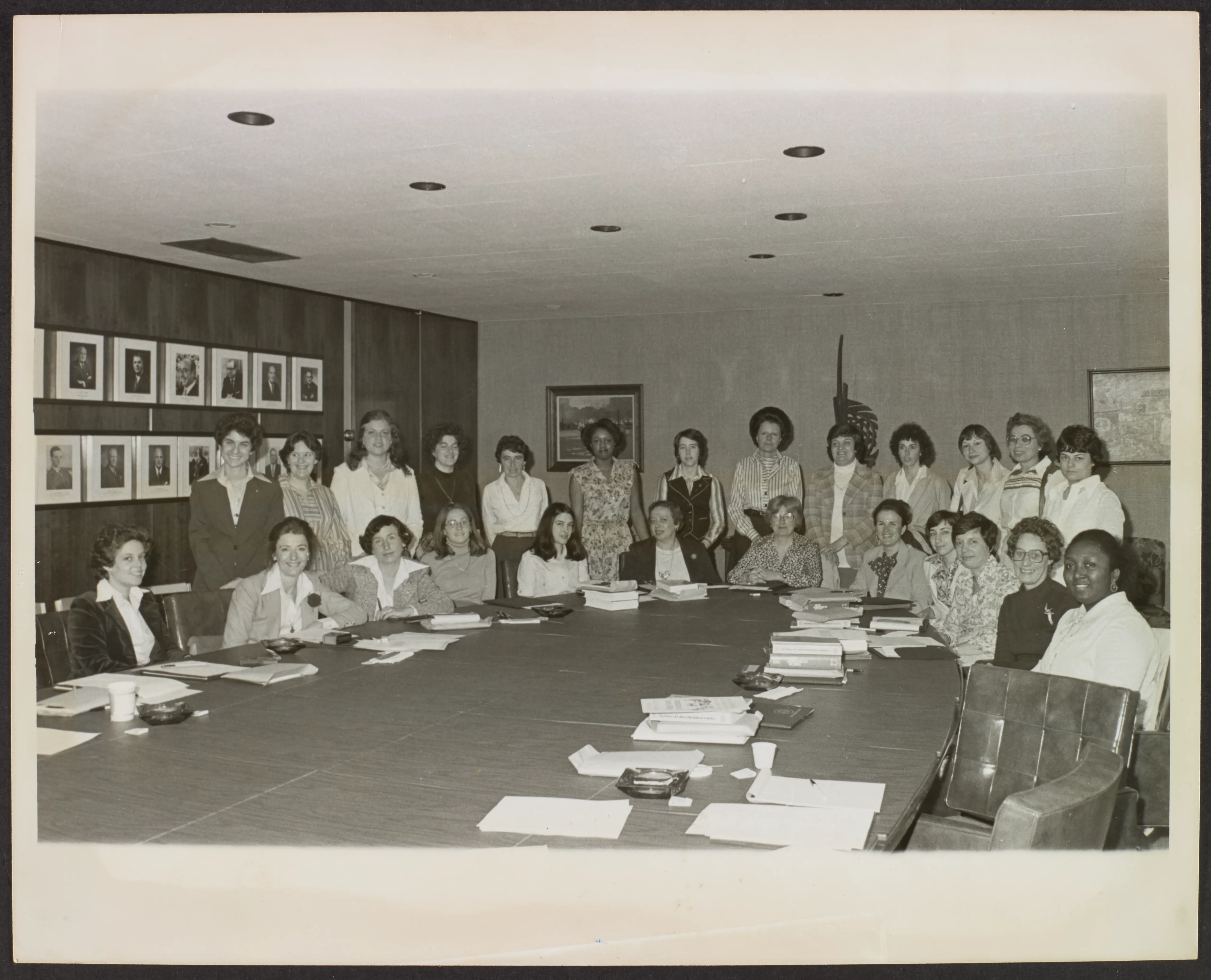
The first class of the Women’s Arbitrator Development Program, 1978.
A Monumental Miscalculation
When the Civil Rights Act of 1964 was first proposed, it made no mention of discrimination based on sex. Virginia Rep. Howard Smith, an opponent of the bill, introduced an amendment to Title VII banning sex-based discrimination in employment — likely hoping to sink the legislation.[1][2] In the measured words of former American Arbitration Association® President Robert Coulson: “He miscalculated.”[3]
Ahead of the Curve
Long before the Title VII amendment, the AAA was making space for women. Frances Kellor, one of its founding members, worked tirelessly to champion the participation of women and other underrepresented groups in legal and civic life.
In 1934, three decades before the Civil Rights Act, the AAA created the Women’s Arbitration Council to promote women’s involvement in arbitration.[4] Just six years later, during WWII, the Council gave women even more of a seat at the table. They voted to create “a special panel of women to work for greater good-will, understanding and unity in the Americas.”[5]
By the time the Civil Rights Act passed, the AAA was already beginning to blossom with brilliant women arbitrators—but it continued to press forward. In 1977, the Association cosponsored “Women as Third-Party Neutrals: Gaining Acceptability,” a groundbreaking conference with Cornell University. Industry veterans including former AAA Regional Director Deborah Brown urged women to build community and support one another.[6]
“We are here,” she declared. “We just have to get together.”[7]
By the time the conference was done, participants were already asking for more. In response, Coulson and Lois Gray, dean of extension and public service at the ILR School at Cornell, committed to developing formal programs to train and advance women in arbitration.[8]
“The AAA is committed to bringing women rapidly into third-party roles,” Coulson said, pledging not just access but also opportunity.[9]
A Promise Kept
From those early councils to today’s Women Panelist Resource Group, the AAA has consistently invested in mentorship and advancement for women in law.[10] Initiatives like the Higginbotham Fellows Program, launched in 2009, and the AAA’s Women in Law Panel extend that legacy by supporting diverse ADR candidates and building networks of belonging.
As Sasha Carbone, founder of the Higginbotham Fellows Program, explains: “Arbitration can be a lonely profession. [The Women in Law panel] is a place where women can talk, exchange ideas, get support. … It’s a powerful forum that we have, and we’re really proud to be able to first develop it and now amplify it across the country.”[11]
For 100 years, the AAA has made space at the table for women and underrepresented groups in the field of ADR — because history has shown that when we all gather around the table, the world is better for it.
[5] https://www.nytimes.com/1940/06/16/archives/to-aid-unity-of-americas-women-of-arbitration-association-form.html?searchResultPosition=15
[11] Sasha Carbone Oral History, AAA/HF, 2025